By Lily, Master Crochet Designer & Finishing Specialist
Have you ever spent three weeks crocheting forty delicate floral granny squares, only to lay them out on the floor and realize they look like warped potato chips with curled edges and crooked corners? Or finished a cardigan where the left front panel is mysteriously two inches longer than the right? It is one of the most disheartening moments in crochet.
Here is the transformative professional secret: **Blocking is the magic wand of fiber arts**. In the fashion industry, no handmade garment ever goes on display straight off the needles. Blocking opens up lace eyelets, straightens wavy edges, relaxes fiber tension, and makes every single square mathematically identical so they join together with razor-sharp perfection.

In this complete finishing guide on the best blocking boards and mats on Amazon, I review solid bamboo pegboards with steel pins, extra-thick grid foam mats, and steam equipment, showing you how to turn wonky handmade items into boutique-quality heirlooms.
Bamboo Pegboard vs. Foam Grid Mats: Which Do You Need?
Different projects require different blocking tools. Using foam mats for fifty tiny squares is tedious, while a wooden pegboard cannot handle a full-sized sweater.
**Solid Bamboo Pegboards** are engineered specifically for modular squares, hexagons, and motifs. You stack a dozen squares vertically on four stainless steel pegs, drying an entire blanket’s worth of blocks in a 10-inch footprint. **Interlocking Foam Grid Mats** are mandatory for large-scale items: shawls, blankets, sweater panels, and lace wraps where you need large flat square footage and printed measurement lines.
Lily’s 3 Rules for Flawless Blocking:
- Never Touch an Iron Directly to Yarn: High heat will instantly melt acrylic into brittle plastic shine and crush delicate wool bloom. Always hold your steamer or iron soleplate at least 1.5 to 2 inches away from the fibers.
- Rust-Proof Stainless Steel Only: Never use cheap dressmaker sewing pins! Ordinary metal pins rust in wet yarn within four hours, leaving permanent orange rust stains that ruin white baby blankets.
- Allow Full 24-Hour Drying: Do not pull pins out while fibers are still cool or damp to the touch. Fibers must dry completely under tension so their molecular memory sets permanently.
Master Modular Patterns:
→ 6 Modern Granny Square Patterns & Textured Cushions for Home Hygge
6 Best Blocking Boards, Mats & Pin Kits Reviewed
These six tested blocking essentials on Amazon will elevate your finished crochet items from homemade to professional store-bought quality.
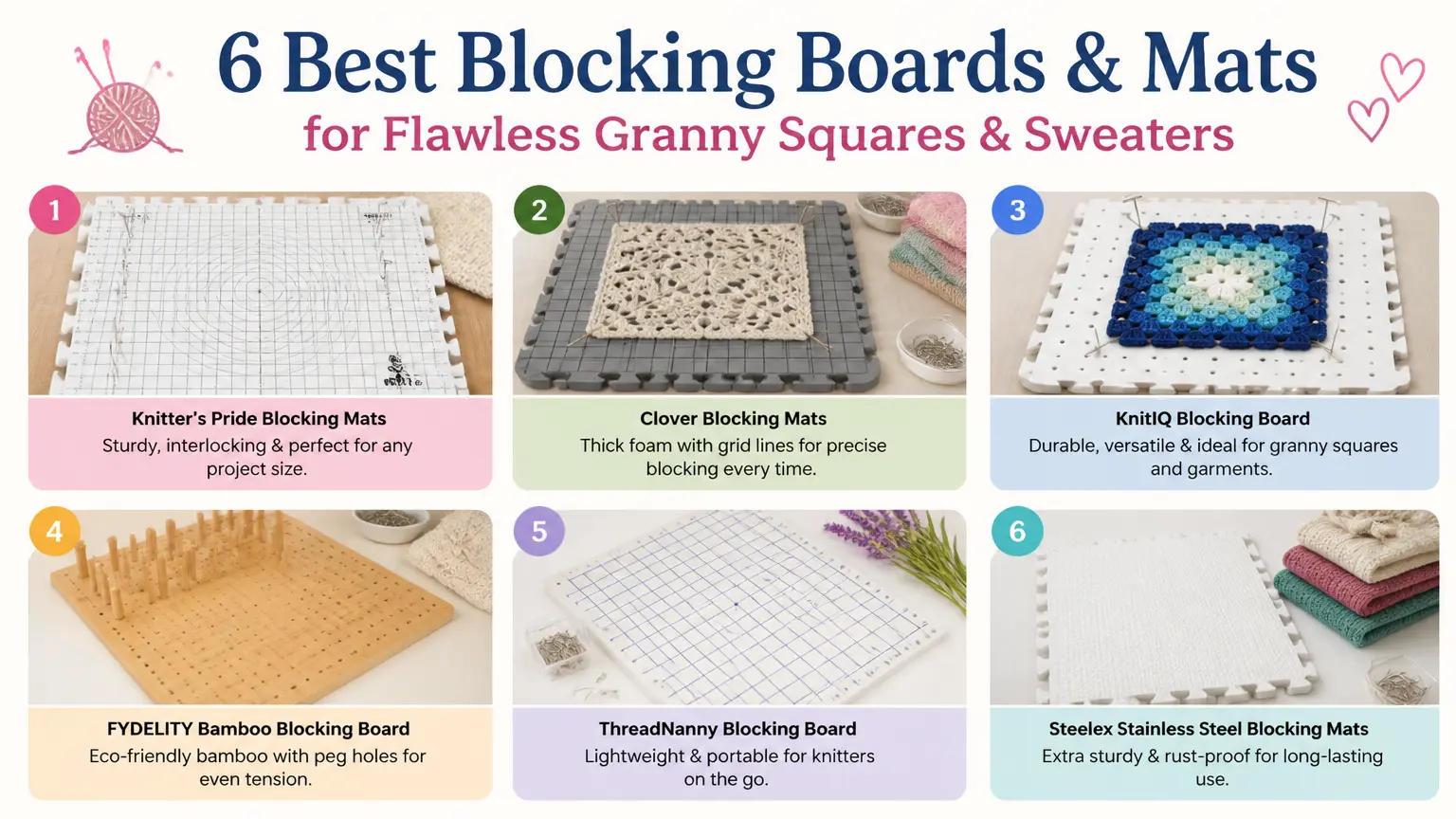
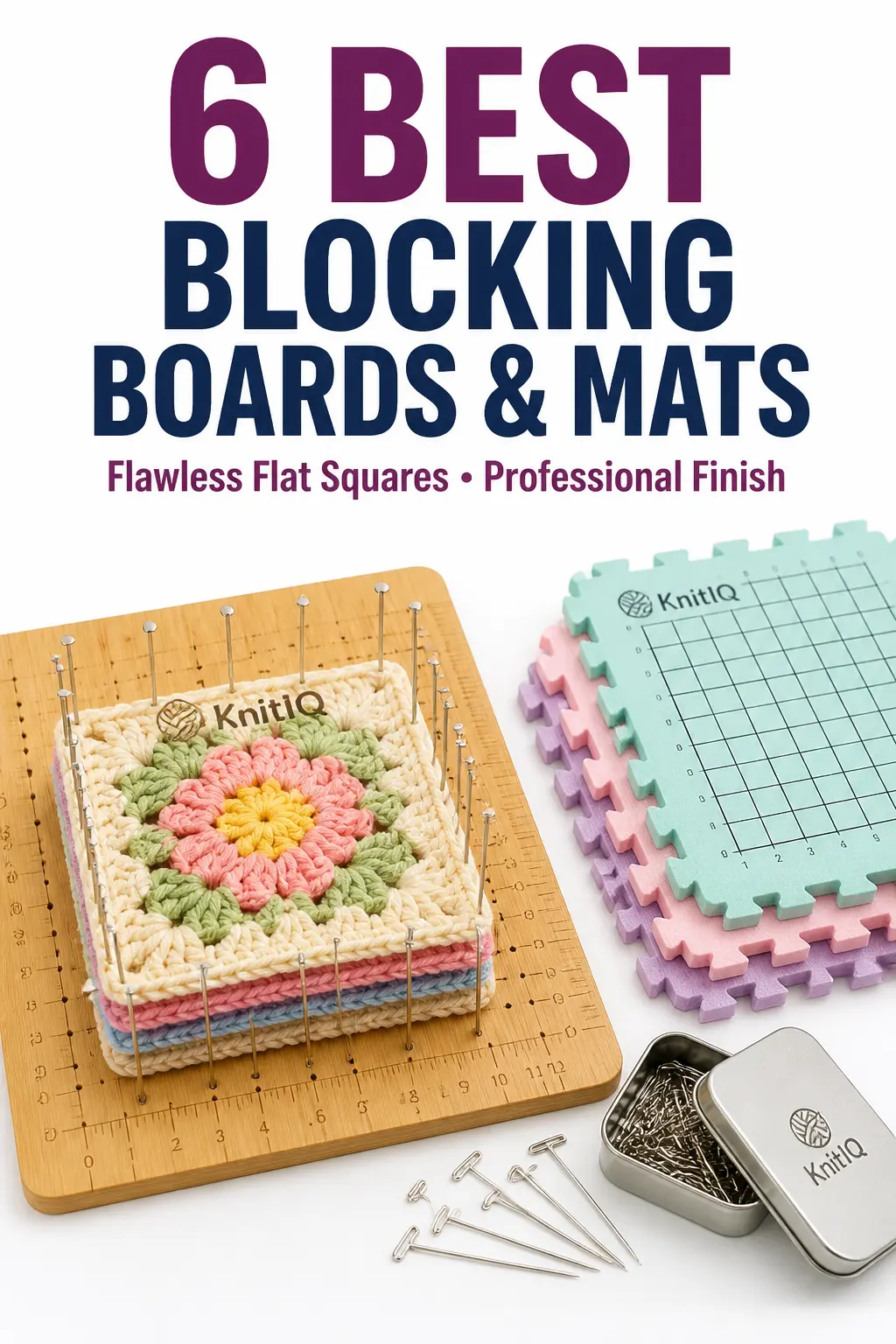
1. Solid Bamboo Granny Square Blocking Board with Steel Pins

Crafted from premium 100% solid polished bamboo, this wooden blocking pegboard features 324 precision-drilled grid holes and 20 heavy-duty 4-inch stainless steel pins.
The board includes a weighted standing base that allows you to stack up to 12 granny squares on a single set of pins and dry them vertically, saving massive craft table space.
Lily’s In-Depth Recommendation:
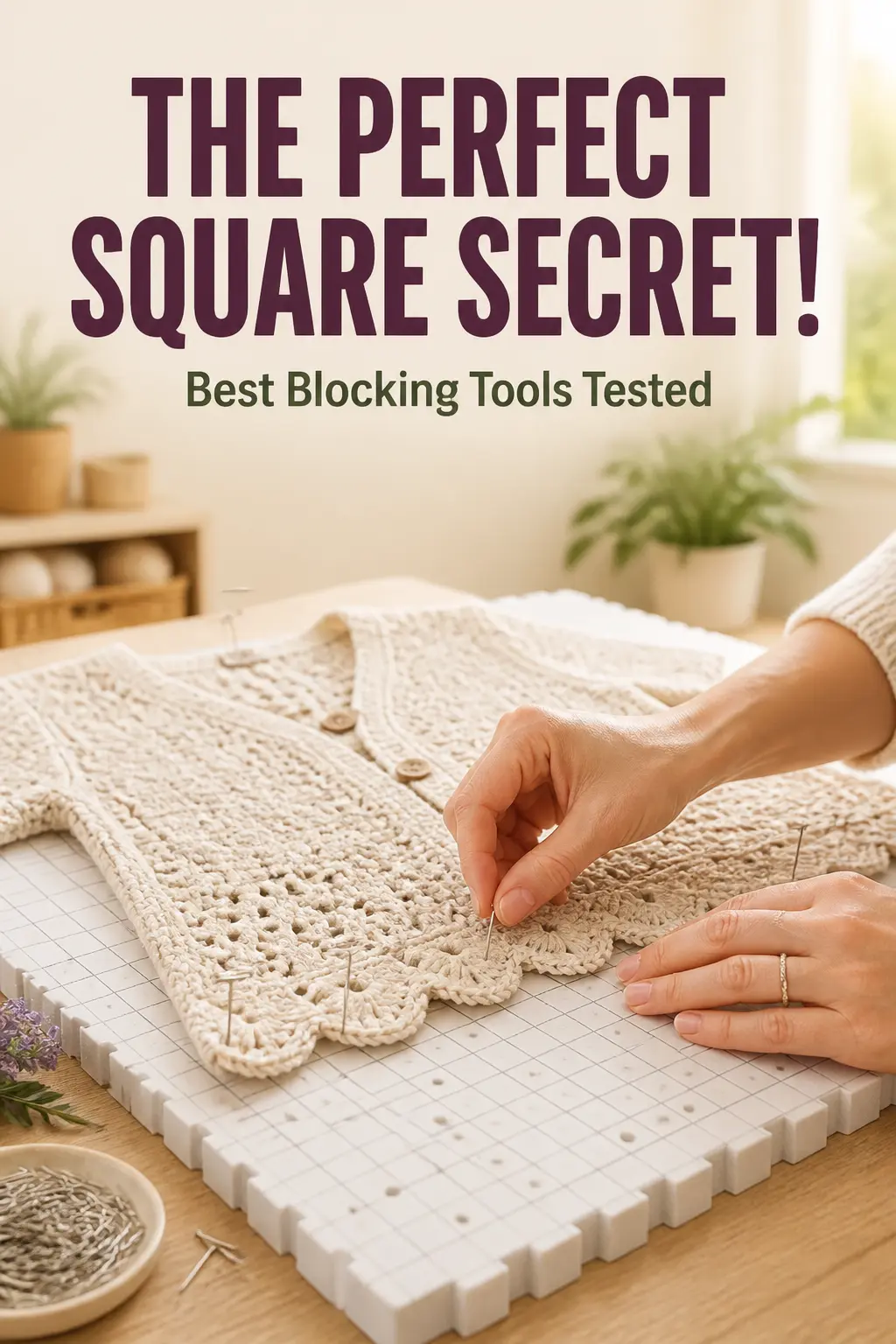
Steam vs Wet Blocking: For acrylic yarn, never wet soak! Pin your pieces on the foam board and hover your steamer 2 inches above, allowing heat to ‘kill’ the acrylic memory into permanent drape. For wool and cotton, wet soak in lukewarm water with Eucalan first.
Granny Stacking Hack: On the bamboo pegboard, stack 10 to 12 matching granny squares on the same four steel pegs while damp. As they dry together, they stretch to the exact identical millimeter size, making blanket joining completely seamless.
Grid Precision: Always align your side seams along the printed grid lines on the KnitIQ mats. Measuring diagonally across opposite corners ensures your cardigans and blankets dry 100% square.
2. KnitIQ Blocking Mats for Knitting & Crochet (Set of 9 with Grid)

The gold standard for garment and shawl blocking. These 0.75-inch extra-thick interlocking dense EVA foam mats feature 1-inch precision grid alignment lines that ensure laser-straight edges.
The heat-resistant foam allows generous steam blocking from clothes irons without melting, warping, or chemical off-gassing.
Lily’s In-Depth Recommendation:
Steam vs Wet Blocking: For acrylic yarn, never wet soak! Pin your pieces on the foam board and hover your steamer 2 inches above, allowing heat to ‘kill’ the acrylic memory into permanent drape. For wool and cotton, wet soak in lukewarm water with Eucalan first.
Granny Stacking Hack: On the bamboo pegboard, stack 10 to 12 matching granny squares on the same four steel pegs while damp. As they dry together, they stretch to the exact identical millimeter size, making blanket joining completely seamless.
Grid Precision: Always align your side seams along the printed grid lines on the KnitIQ mats. Measuring diagonally across opposite corners ensures your cardigans and blankets dry 100% square.
3. Clover Stainless Steel Fork Blocking Pins

An ingenious double-prong fork pin that anchors curved borders, picot lace points, and sweater side seams with twice the holding power of single T-pins.
Made of surgical-grade stainless steel that will never rust or leave orange oxidation stains on wet white cotton or pastel wool.
Lily’s In-Depth Recommendation:
Steam vs Wet Blocking: For acrylic yarn, never wet soak! Pin your pieces on the foam board and hover your steamer 2 inches above, allowing heat to ‘kill’ the acrylic memory into permanent drape. For wool and cotton, wet soak in lukewarm water with Eucalan first.
Granny Stacking Hack: On the bamboo pegboard, stack 10 to 12 matching granny squares on the same four steel pegs while damp. As they dry together, they stretch to the exact identical millimeter size, making blanket joining completely seamless.
Grid Precision: Always align your side seams along the printed grid lines on the KnitIQ mats. Measuring diagonally across opposite corners ensures your cardigans and blankets dry 100% square.
4. Knitter’s Pride Knit Blockers (Set of 20 Multi-Pin Anchors)

Instead of placing fifty individual pins along a sweater hem, these multi-prong plastic block bars anchor 4 or 8 stitches in one effortless push.
Guarantees perfectly straight, tensioned hem edges without the wavy scallop distortions caused by uneven pin spacing.
Lily’s In-Depth Recommendation:
Steam vs Wet Blocking: For acrylic yarn, never wet soak! Pin your pieces on the foam board and hover your steamer 2 inches above, allowing heat to ‘kill’ the acrylic memory into permanent drape. For wool and cotton, wet soak in lukewarm water with Eucalan first.
Granny Stacking Hack: On the bamboo pegboard, stack 10 to 12 matching granny squares on the same four steel pegs while damp. As they dry together, they stretch to the exact identical millimeter size, making blanket joining completely seamless.
Grid Precision: Always align your side seams along the printed grid lines on the KnitIQ mats. Measuring diagonally across opposite corners ensures your cardigans and blankets dry 100% square.
5. Beautural Portable Handheld Garment Steamer

The secret weapon for fast steam blocking. Reaches steaming temperature in 30 seconds and delivers continuous high-penetration steam that relaxes stubborn acrylic and wool fibers instantly.
Allows you to steam block delicate shawls and cardigans directly on the blocking mats without touching an iron soleplate to delicate fibers.
Lily’s In-Depth Recommendation:
Steam vs Wet Blocking: For acrylic yarn, never wet soak! Pin your pieces on the foam board and hover your steamer 2 inches above, allowing heat to ‘kill’ the acrylic memory into permanent drape. For wool and cotton, wet soak in lukewarm water with Eucalan first.
Granny Stacking Hack: On the bamboo pegboard, stack 10 to 12 matching granny squares on the same four steel pegs while damp. As they dry together, they stretch to the exact identical millimeter size, making blanket joining completely seamless.
Grid Precision: Always align your side seams along the printed grid lines on the KnitIQ mats. Measuring diagonally across opposite corners ensures your cardigans and blankets dry 100% square.
6. Hephaestus Extra-Long 1.5-Inch Stainless Steel T-Pins (150 Pcs)

Extra-long 1.5-inch T-pins featuring wide crossbar heads that give your thumbs comfortable pressing leverage into dense foam boards.
Tested for 100% rust-proof performance; packaged in a reusable transparent travel case with magnetic lid.
Lily’s In-Depth Recommendation:
Steam vs Wet Blocking: For acrylic yarn, never wet soak! Pin your pieces on the foam board and hover your steamer 2 inches above, allowing heat to ‘kill’ the acrylic memory into permanent drape. For wool and cotton, wet soak in lukewarm water with Eucalan first.
Granny Stacking Hack: On the bamboo pegboard, stack 10 to 12 matching granny squares on the same four steel pegs while damp. As they dry together, they stretch to the exact identical millimeter size, making blanket joining completely seamless.
Grid Precision: Always align your side seams along the printed grid lines on the KnitIQ mats. Measuring diagonally across opposite corners ensures your cardigans and blankets dry 100% square.
How to Wet Block Wool vs. Steam Block Acrylic
Different yarn fibers respond to different physics during the blocking process:
Fiber-Specific Blocking Rules:
- Animal Fibers (Wool, Alpaca, Cashmere): Wet block! Submerge in lukewarm water with no-rinse wool wash for 15 minutes, press in towels, pin to shape on foam mats, and air dry.
- Plant Fibers (Cotton, Linen, Bamboo): Wet block with generous spray starch or steam block under a damp pressing cloth to sharpen lace picots.
- Synthetic Fibers (Acrylic, Polyester, Chenille): Steam block only! Heat relaxes the synthetic polymers. Hover steam 2 inches away and let cool completely.
Give Your Stitches the Finish They Deserve
You invested forty hours of love and patience into crocheting your project. Spending twenty minutes to block your finished piece is the crowning touch that honors your hard work and makes you truly proud of what you created.
Set up your blocking board, pin those edges straight, and watch your stitches transform before your eyes!

Written by Lily
Crochet Designer & Garment Finishing Specialist
I test blocking tools, steamers, and fiber care systems. I teach crafters how proper finishing techniques turn simple yarn into polished, heirloom-quality clothing and decor.
Affiliate Disclosure: This post contains affiliate links to Amazon, LoveCrafts, and Creative Fabrica. If you click through and make a purchase, I may receive a small commission at no extra charge to you. I only recommend premium tools, digital charts, and yarn I trust and use daily.